Descriptive vs Predictive Analytics
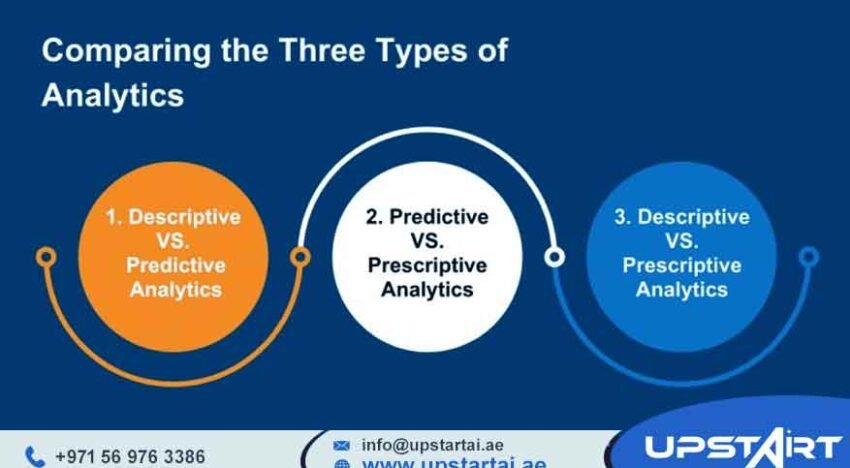
In the high-stakes world of the Gulf economy, the real winners are the ones who can tell the difference between looking at old reports and actually forecasting the future. Understanding the fine lines of Descriptive vs Predictive Analytics is no longer just a nerdy task for data scientists;
it is a vital part of running a modern company. At UpstartAI, we help leaders across the seven Emirates move past those old, backwards-looking dashboards. Instead, we use advanced modeling to turn your raw data into a shield that protects you from market ups and downs.
Schedule a Free Call Today Certified Experts | UAE-Wide Clients | ROI-Focused Campaigns | 10+ Years Experience
Why UpstartAI is the Leading Authority on descriptive vs predictive analytics UAE
The digital scene in the Emirates is moving incredibly fast, fueled by big ideas like Dubai 10X and Abu Dhabi’s 2030 Vision. Getting a handle on descriptive vs predictive analytics UAE takes a partner who doesn’t just know the math and algorithms, but also understands the local way of doing business in the Middle East.
At UpstartAI, we bridge that gap. We take global tech standards and ground them in local reality, making sure your data plan is as solid as the foundation of the Burj Khalifa.
The truth is, way too many local firms are stuck in a “rearview mirror” way of thinking. They are sitting on piles of data but don’t have the right experts to figure out what comes next. By focusing on descriptive vs predictive analytics UAE,
we help bosses stop asking “what happened?” and start asking “what is about to happen?” More importantly, we show you how to change that outcome. This shift is how you stay ahead, whether you’re in DIFC fintech or heavy manufacturing in Sharjah.
In the real world, these tools have to work with local rules, like VAT compliance and the unique logistics of Jebel Ali Port. UpstartAI starts every project with a “Business First” mindset.
We make sure that your data maturity actually leads to a better ROI. That could mean a 15% drop in supply chain costs or a massive jump in lead quality for property developers in the capital. We don’t just build systems; we build results.
Our Data Intelligence Services: Mastering descriptive analytics UAE
Before a company can try to predict the future, it needs a crystal-clear picture of what it’s doing right now. Our descriptive analytics UAE services are all about creating one “source of truth” for your business. We pull together messy data from all over the place-old ERPs, CRMs,
and even social media-to give you a perfect snapshot of your business health. Think of this as the essential foundation. You can’t grow without it.
Setting up high-quality descriptive analytics UAE is about more than just making pretty charts. It requires some serious data engineering behind the scenes. We handle the heavy lifting of cleaning and storing data so your team can use interactive dashboards to make quick calls.
They won’t have to wait for a weekly IT report. For a shop in Dubai Mall, this might mean tracking stock in real-time, so they can change staff levels or put up new displays based on how many people are walking through the door.
We also make sure your reports follow all the local UAE laws. Whether you’re dealing with the Dubai Data Law or Economic Substance Regulations, our descriptive analytics UAE tools are built to keep you compliant.
We give you the transparency you need for audits, which helps you avoid fines. At the same time, we find hidden ways to save money and work faster in your current setup. It’s about being safe and smart at the same time.
Elevate Your Strategy with predictive analytics UAE Expertise
Once your old data is in order, the next logical move is to use machine learning to see what’s coming next. Our predictive analytics UAE services give your business a sense of foresight.
We find patterns in massive piles of data that no human could ever spot. This helps you dodge risks before they hit and grab new opportunities before your competitors even know they exist.
In the Abu Dhabi property market, for example, using predictive analytics UAE can be the difference between a project that sells out and one that sits empty. We look at past price trends, how people are moving, and even global news to build models that show which areas will grow the most in ten years.
This gives investment heads the confidence to put their money in the right place, backed by hard facts rather than just a “gut feeling.”
The real magic of predictive analytics UAE is how it fixes the way you talk to customers. We help firms in the SAIF Zone predict which customers might leave and which ones are going to be their biggest fans.
When you know who is about to walk away, you can fix the relationship with surgical precision. This stops you from wasting money on the wrong ads and makes your overall lead quality much, much higher.
The 3-Step Process for Implementing descriptive vs predictive analytics in UAE
Setting up a big data strategy needs a solid plan so you don’t mess up your daily work. At UpstartAI, we use a clear three-step path for descriptive vs predictive analytics in UAE that keeps everyone on the same page, from the IT room to the boardroom.
We are always honest about how long things take. Usually, you’re looking at 12 to 24 weeks depending on how messy your current data looks.
Phase 1: Discovery and Data Audit: We start by mapping out where your data lives and checking if it’s actually any good. During this time, we match our tech goals to your business goals so we know exactly what a “win” looks like.
Phase 2: Model Engineering and Integration: This is where we get to work. We build the pipelines to move your data and train the AI using local Gulf data. We make sure it fits perfectly with your current tools, like SAP or Oracle.
Phase 3: Deployment and Training: A tool is useless if your people don’t know how to use it. We roll out the dashboards and train your staff. This makes sure the “Descriptive vs Predictive Analytics” shift actually sticks as part of your company culture.
The price of setting up descriptive vs predictive analytics in UAE can change a lot, but we usually suggest a “quick win” approach. By fixing the big problems first-like supply chain issues or ad spend-the project often pays for itself in just six months.
This way, you don’t have to spend everything at once. You can build momentum as you see the digital transformation start to work for all your different departments.
Industry Platforms We Cover for predictive analytics vs descriptive analytics UAE
To win today, you can’t be tied down to just one tool. Whether your company is all about the cloud or needs to keep data on your own servers, UpstartAI has the skills to manage predictive analytics vs descriptive analytics UAE on any platform.
We work closely with the big names like AWS and Azure, but we also know the regional providers who specialize in Middle Eastern laws. We give you the best of both worlds.
For teams focused on sales, we plug predictive analytics vs descriptive analytics UAE right into your CRM and ad tools.
This lets you change your Google Ads or LinkedIn bids in real-time based on who is actually likely to buy. We turn your marketing team into a profit machine. Everything starts working with mathematical certainty, no matter which Emirate you are based in.
[Image comparing cloud-native data platforms like Snowflake, BigQuery, and Redshift for analytics workloads]
We also take data sovereignty very seriously. For government groups or sensitive businesses, we set up predictive analytics vs descriptive analytics UAE systems that keep every bit of info inside the UAE’s borders.
This keeps you in line with NESA standards while still giving you the high-speed power of modern machine learning. You get the safety of a private setup with the speed of a public one.
Critical Problems We Solve Using Descriptive vs Predictive Analytics
The biggest problem for companies in the UAE is the “Data Swamp.” This is where you collect tons of info but never actually use it. By helping you understand the roles of Descriptive vs Predictive Analytics, we help you clear out the swamp and find the gold.
A major issue we fix is operational messiness caused by simply not being able to see what’s happening. Without a solid baseline, managers are often just “guessing” why a project in RAK is failing while one in Dubai is doing great.
Next, we tackle “Reactionary Management.” Most local businesses only change their plan after something goes wrong. By switching to a predictive setup,
you can manage risks before they happen. Imagine a shipping company in Abu Dhabi using weather and traffic data to move their fleet two days before a storm hits. They stay on schedule while their competitors are stuck in the mud.
Finally, we help with the rising cost of finding new customers. In a crowded market like ours, generic ads are a total waste of cash. By looking at both past patterns and future behavior,
we help you find your “Ideal Customer” with 99% accuracy. This means every dirham you spend on ads goes toward people who are actually going to buy. It lowers your costs and boosts your profits over the long haul.
Pricing Insight for Data Projects in the Emirates
We know that for procurement heads, understanding the cost is everything. We don’t do “fluff” pricing. Instead, we use a value-based plan for descriptive vs predictive analytics UAE. Usually, a project starts with a flat fee for the discovery phase,
followed by either a monthly retainer or set fees for hitting goals. This keeps UpstartAI accountable for real results and makes sure your budget doesn’t spiral out of control.
Things that change the price include how much old data you have and how many different systems we need to connect. For a medium-sized company in Sharjah or Ajman, the project often pays for itself just by automating boring reports.
When you add in the predictive wins-like wasting less stock or closing more sales-the project usually returns 3x to 5x your investment within the first year and a half.
We also have “Fractional Data Scientist” plans for startups in Dubai. You get high-level brains without the massive cost of a full-time executive. This lets smaller teams use the same descriptive vs predictive analytics UAE tools that the giant corporations use.
We believe top-tier tech should be available to any firm with the drive to grow across the GCC. Our prices reflect that.
Expert Advice: Trends in predictive analytics UAE for 2026
Looking ahead to 2026, the biggest trend is “Generative BI.” This lets regular managers talk to their predictive analytics UAE models using normal language.
You won’t have to wait for a tech expert to write code. A manager in Umm Al Quwain can just ask, “Which of our building projects might be late next month?” and get an instant, detailed answer based on live data.
Another big change is the rise of “Hyper-Local” models. Global data models often miss the unique things about the Middle East, like Ramadan spending or the impact of the World Expo. UpstartAI builds models that are tuned into these local rhythms.
We make sure your predictive analytics UAE strategy is based on the actual reality of living and working in the Gulf, not some generic global template.
Lastly, “Sovereign AI” is becoming huge. With the UAE government investing so much in local data centers, the setup for secure analytics has never been better. Our advice? Start now.
The data you clean and organize today is what will power your AI tomorrow. If you wait until 2026 to start your predictive analytics UAE journey, you’ll find that your competitors are already miles ahead.
Why UpstartAI is the #1 Choice for descriptive vs predictive analytics UAE
Picking a partner for your data is a huge choice that will shape your company for years. At UpstartAI, we are the #1 choice for descriptive vs predictive analytics UAE because we offer the deep strategy of a giant consulting firm with the speed of a small tech shop.
We don’t just hand you a PDF report; we build an engine for growth that stays inside your company and keeps working.
Our team is made of certified experts who have spent ten years fixing Gulf-specific problems. We’ve handled data for over 100 UAE clients, from the skyscrapers of Dubai to the industrial zones of Ras Al Khaimah.
This local knowledge is our secret weapon. It lets us see the roadblocks that a foreign company would totally miss. When you work with us, you get a team that is just as excited about the UAE’s success as you are.
At the end of the day, we care about results. We don’t measure success by how cool our algorithms are; we measure it by how much money we add to your balance sheet. This focus on ROI is why the region’s most respected firms stay with us for years. We invite you to see for yourself what localized, elite intelligence can do for your business.
Client Success: Scaling an Abu Dhabi Firm via descriptive analytics UAE
One of our favorite stories involves a big distribution company in Abu Dhabi that couldn’t keep track of their stock across different warehouses. By setting up a strong descriptive analytics UAE plan, we cleaned up their data silos.
For the first time in thirty years, the bosses had a live view of their stock and sales. This move alone cut their dead stock by 12% in just three months.
After we got the basics right, we moved on to predictive analytics UAE. We built a model that could guess future demand by looking at local holidays and economic shifts. This let the firm stop reacting to problems and start planning ahead.
They optimized their cash flow and made sure their best-sellers were never out of stock. This combo of clarity and forecasting let them expand into two new markets in less than two years.
FAQs: Understanding predictive analytics vs descriptive analytics UAE
What is the main difference in Descriptive vs Predictive Analytics ROI? The money you make back from descriptive tools usually comes from saving time and fixing errors. The ROI for predictive analytics vs descriptive analytics UAE comes from bigger strategic wins, like stopping customers from leaving or getting your pricing perfect, which has a huge impact on your total profit.
How do I start with descriptive vs predictive analytics in UAE? You start with a data audit. UpstartAI offers a workshop where we look at your current data and find the best places to start modernizing. This makes sure your descriptive vs predictive analytics in UAE plan starts on a firm foundation.
Which tool is best for predictive analytics UAE? There isn’t just one “perfect” tool. The best one depends on your industry and where you need to keep your data. We work with everything from AWS to local private clouds to make sure your predictive analytics UAE setup fits you like a glove.
Does my business need descriptive analytics UAE before moving to AI? Yes, absolutely. Trying to build AI on top of messy, low-quality data is a waste of time. You need a clean, descriptive baseline before you can move on to a successful descriptive analytics UAE or predictive project.
How does data privacy work for descriptive vs predictive analytics UAE projects? We follow the strict UAE PDPL and international GDPR rules. Our descriptive vs predictive analytics UAE projects use “Privacy by Design,” meaning we build in things like data masking and local hosting from day one.
Can UpstartAI integrate with my existing ERP in Sharjah or RAK? Yes, we do it all the time. Our team builds custom connectors for older systems. This ensures your predictive analytics vs descriptive analytics UAE plan uses every piece of data your company has ever collected, no matter what format it’s in.
Start Your Journey with Descriptive vs Predictive Analytics Today
The gap between companies that “get” their data and those that are just guessing is getting bigger every day. Starting a Descriptive vs Predictive Analytics plan is the single biggest thing you can do to protect your business’s future.
At UpstartAI, we are ready to guide you through this change, giving you the expert help and local knowledge you need to turn your data into a real winning edge.
The cost of doing nothing is much higher than the cost of getting smart. Every day you wait, your rivals are using their data to win over your customers in the UAE’s best markets. Take charge of your future right now.
UpstartAI: Your Partner in Sovereign Data Excellence Website: www.upstartai.ae Phone: +971 569763386 Email: info@upstartai.ae Location: Dubai, UAE (Serving all 7 Emirates)