ERP for Healthcare
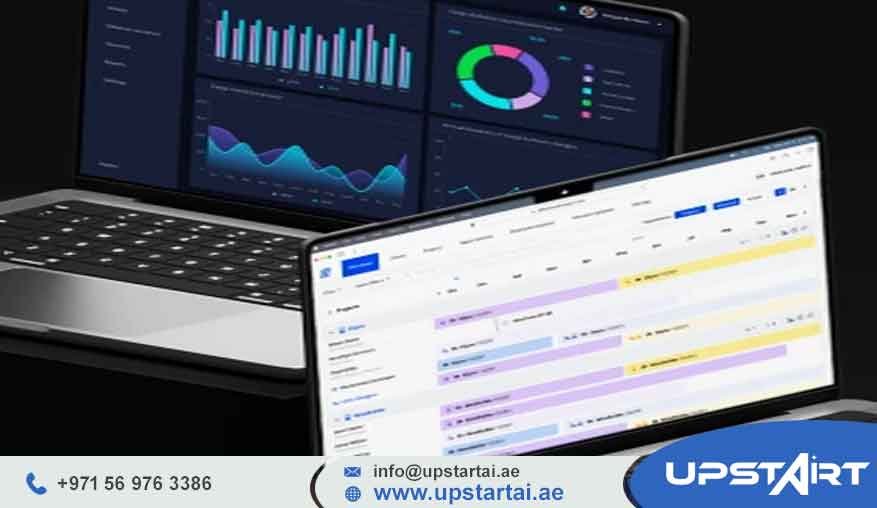
ERP for Healthcare: Easy AI Dashboards for UAE Hospitals. In the busy medical world of the United Arab Emirates, data is everything. But let’s be honest-too much data just feels like noise if you can’t see it clearly. At UpstartAI, we help bridge that gap. We take all those complicated hospital operations and turn them into simple, useful info. Our ERP for healthcare isn’t just a software; it’s like a smart brain for your hospital that brings together your clinical, money, and staff data into one easy-to-use screen.
Whether you’re running a big multi-specialty hospital in Dubai or a small clinic in Abu Dhabi, we make sure your leaders can see exactly what’s happening in every room, pharmacy shelf, and billing desk right now. By putting smart analytics into your daily work, we help you stop doing so much manual paperwork. It’s about making things faster and keeping patients happy.
Want to see how it works? Ask for a Demo | Get a Free Chat with our UAE Team | Talk to an Expert
Safe with Data: We follow all UAE laws (like Decree Law No. 45) to keep patient info private.
Fast Setup: Our team is right here in the UAE to help you get started quickly.
Useful Dashboards: We build screens that show you the specific numbers you actually care about.
Local Knowledge: We know exactly what DHA, MOHAP, and DOH need from you.
Why People Choose UpstartAI
Building trust in healthcare is all about being steady and correct. UpstartAI has become a go-to partner for hospitals in the UAE because we combine tech skills with real local experience. We know that a hospital in Sharjah has different rules than a clinic in a Dubai free zone. Our team puts data safety first, so your patient files stay locked up, but your managers still get the clear view they need to make good choices.
It’s not just about the tech, though. We work fast. In a hospital, every hour spent on messy reports is an hour lost from helping patients. That’s why we have a simple setup process and stay around 24/7 to help you. Whether you’re getting ready for a UAE VAT audit or trying to fix staff schedules, we’re not just a company you buy from—we’re a partner who actually cares about your success.
What We Do: Smart Analytics and Dashboards
We take a normal healthcare ERP system and turn it into something that actually helps you plan ahead. We make custom ERP dashboards for hospitals that let you see everything at once.
Manager & KPI Screens: A quick look for hospital owners to see patient happiness, how many beds are full, and if the money is looking good.
Billing & Money Charts: Special healthcare ERP billing software tools to track insurance claims and see where the cash is.
Operations & Sales: Keep an eye on waiting times, surgery room use, and medicine stocks so you don’t run out of things.
Healthcare HR ERP Software: Easy tools for hospital staff scheduling ERP and handling payroll ERP for clinics that follows the UAE WPS rules.
Clinical Analytics: Look at how treatments are going and find ways to keep patients safer.
Bringing Data Together: We pull info from your old systems—like EHR or pharmacy apps—and put it into one clean, automatic report.
How We Get Started
We try to make the setup process smooth so it doesn’t mess up your busy day.
First Chat: we start by listening to your problems, like too many insurance rejections or messy inventory.
Mapping Your Needs: Our team talks to your department heads to figure out which numbers are the most important.
Checking Your Data: We look at your current computers and systems to see where the info is hiding.
Building the Dashboard: Using a cloud ERP for healthcare or a local server, we connect everything and build your screens.
Practice & Learning: We test everything and then sit down with your staff to teach them how to use it easily.
Handover & Fixing: After we go live, we stay close to make sure everything is working perfectly as you grow.
Problems We Fix
A lot of hospitals here struggle because one department doesn’t know what the other is doing. UpstartAI fixes those “blind spots.”
We end the “Excel Nightmare” where your team spends days making reports that are already old by the time they’re finished. Our reporting automation keeps things fresh and live. We also help if you have branches in different places, like Ajman and RAK, so you can see them all in one way. From stopping you from running out of medicine to helping you make faster decisions, our dashboards just make things clear.
Thinking About the Cost
At UpstartAI, we like to be very clear about how we charge. The price for a healthcare ERP platform in the UAE depends on a few things:
many systems we connect: Linking one EHR is easier than connecting labs, x-ray systems, and pharmacies all at once.
How many people use it: If everyone needs access or just a few managers.
How fast it updates: Live data costs a bit more than data that updates once a day.
Where it lives: A SaaS ERP for hospitals is usually a monthly fee, while keeping it on your own servers costs more at the start.
For a normal clinic, it might cost between 35,000 AED and 90,000 AED to get started. Big hospitals need a custom price because they need a lot more clinical analytics ERP features. We’ll give you a real estimate after we chat.
Tips for Making Your ERP Work
Buying the best healthcare ERP systems 2026 is only half the job. You have to be ready. We tell people to clean up their old data first-if the old info is wrong, the new charts will be wrong too.
Pick your KPIs carefully-don’t try to track 100 things at once. Start with the 5 things that matter most. To get people to use it, talk to your doctors and nurses early. If the tool saves them time, they will love it. Also, don’t forget security! In the UAE, you need to make sure your ERP compliance software healthcare follows the NESA rules.
Why We’re Different
UpstartAI is different because we focus on the results, not just the code. We don’t just sell you features; we give you a tool that actually works. Our screens look great and are super easy to use, so you don’t need a tech degree to understand them.
We built our system specifically for the UAE, with Arabic language options and local tax settings already inside. Plus, our AI-driven insights don’t just show the past-they help you guess how many patients are coming next week. This helps you plan your staff and medicine better. We’re also very fast at getting things running.
FAQs – ERP for Healthcare
1. What is ERP for Healthcare and how does it work?
ERP (Enterprise Resource Planning) for Healthcare is an integrated software solution designed to manage hospital operations, financial systems, supply chains, HR, patient billing, compliance, and reporting within a unified platform.
Unlike standalone hospital management systems, healthcare ERP connects multiple departments into a centralized database.
How it works:
-
Integrates finance, procurement, HR, inventory, and patient administration
-
Automates workflows across departments
-
Provides real-time dashboards and reporting
-
Ensures regulatory compliance and data security
Example:
A multi-specialty hospital can use ERP to automatically:
-
Track medicine inventory in real time
-
Link patient billing with insurance processing
-
Monitor doctor schedules and payroll
-
Generate financial reports instantly
This eliminates manual paperwork and reduces operational delays.
2. What are the key benefits of ERP in healthcare organizations?
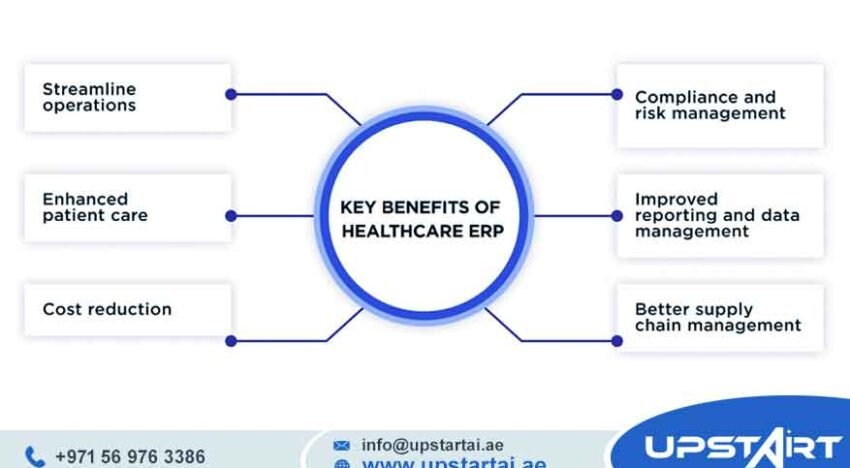
Healthcare ERP improves efficiency, transparency, and patient service quality.
Major benefits include:
-
Centralized patient and financial data
-
Automated billing and insurance claims
-
Real-time inventory and pharmacy management
-
Improved compliance with healthcare regulations
-
Reduced operational cost
-
Better decision-making through analytics
Example:
A hospital using ERP can:
-
Automatically reorder medical supplies when stock runs low
-
Track outstanding payments from insurance providers
-
Analyze patient admission trends for better resource planning
3. How does ERP improve patient care?
While ERP primarily manages operations, it indirectly enhances patient care by optimizing backend processes.
ERP supports patient care by:
-
Reducing administrative delays
-
Improving appointment scheduling efficiency
-
Ensuring accurate billing and insurance processing
-
Providing data insights for treatment planning
-
Streamlining inter-department communication
Example:
If lab results, billing, and patient records are integrated into one ERP system:
-
Doctors can access accurate patient data instantly
-
Billing errors are minimized
-
Patients experience faster discharge processes
4. What modules are included in a healthcare ERP system?
Healthcare ERP systems are modular, allowing hospitals to implement specific functionalities.
Common modules include:
-
Financial Management
-
General ledger
-
Budgeting
-
Revenue cycle management
-
-
Supply Chain & Inventory
-
Medical inventory tracking
-
Vendor management
-
Procurement automation
-
5. Is ERP suitable for small clinics or only large hospitals?
ERP solutions are scalable and can be customized for:
-
Small clinics
-
Diagnostic centers
-
Specialty hospitals
-
Large multi-location healthcare networks
Example:
-
A small clinic may use ERP only for billing, inventory, and HR.
-
A large hospital may implement advanced modules like AI-driven analytics and predictive forecasting.
Cloud-based ERP systems make it affordable for smaller healthcare providers.
6. What is the difference between Healthcare ERP and Hospital Management System (HMS)?
Many people confuse ERP with HMS, but they serve different purposes.
Hospital Management System (HMS):
-
Focuses mainly on clinical operations
-
Manages patient records, appointments, and diagnostics
Healthcare ERP:
-
Covers broader business operations
-
Integrates finance, HR, supply chain, compliance, and analytics
-
Connects administrative and clinical data
In short:
HMS manages patients.
ERP manages the entire healthcare enterprise.
7. How does ERP ensure compliance and data security in healthcare?
Healthcare organizations must comply with strict data protection regulations.
ERP systems ensure compliance through:
-
Role-based access control
-
Encrypted patient data
-
Audit trails and activity logs
-
Regulatory reporting automation
-
Secure cloud hosting environments
Example:
If a healthcare authority requires monthly compliance reporting, ERP can automatically generate and export standardized reports.
8. What challenges should healthcare organizations consider before ERP implementation?
While ERP offers major advantages, implementation requires planning.
Common challenges include:
-
High initial setup cost
-
Staff training requirements
-
Data migration complexity
-
Integration with existing systems
-
Change management resistance
Best practice:
-
Conduct a needs assessment
-
Choose scalable ERP software
-
Provide proper employee training
-
Implement in phases
9. How does ERP help in healthcare cost control?
ERP improves financial transparency and cost optimization.
Ways ERP reduces costs:
-
Prevents overstocking or understocking of medicines
-
Automates billing to reduce revenue leakage
-
Identifies unnecessary expenses
-
Tracks departmental budgets
-
Improves procurement efficiency
Example:
An ERP dashboard may reveal that one department is overspending on supplies, allowing management to adjust purchasing strategies.
10. What is the ROI of implementing ERP in healthcare?
The return on investment (ROI) of healthcare ERP includes both financial and operational benefits.
ROI comes from:
-
Reduced administrative workload
-
Faster billing cycles
-
Improved revenue collection
-
Lower inventory wastage
-
Better patient satisfaction
Hospitals typically see long-term gains in efficiency, transparency, and profitability.
Let’s Get Your Hospital Sorted
Running a hospital or clinic in the UAE isn’t easy. Between managing patient records, insurance claims, staff schedules, pharmacy inventory, billing compliance, and regulatory reporting, things can quickly become overwhelming – especially if you’re relying on spreadsheets or disconnected systems.
It doesn’t have to be that way.
UpstartAI is here to help you simplify operations, improve visibility, and bring clarity to your healthcare management processes. Whether you are looking to invest in a full Healthcare ERP system or simply want better reporting dashboards to track performance, we provide solutions that are built specifically for hospitals and clinics in the UAE.
Smarter Healthcare Management Starts with Better Data
Imagine having:
-
Real-time visibility into patient flow
-
Automated billing and insurance claim tracking
-
Centralized electronic medical records (EMR)
-
Clear financial dashboards for leadership
-
Staff scheduling with workload optimization
-
Pharmacy inventory tracking with low-stock alerts
Instead of spending hours chasing reports or fixing manual errors, your team can focus on what matters most — patient care.
For example, a mid-sized clinic in Dubai used UpstartAI healthcare dashboards to reduce claim processing delays by 35% and improve appointment scheduling efficiency across multiple departments. With centralized reporting, leadership could instantly see revenue trends and patient satisfaction metrics.
That’s the power of organized data.
Designed for UAE Healthcare Requirements
Healthcare providers in the UAE must comply with strict regulatory standards, including:
-
DHA (Dubai Health Authority) requirements
-
DOH (Department of Health Abu Dhabi) regulations
-
MOHAP guidelines
-
Insurance reporting standards
-
VAT compliance for medical services
UpstartAI ensures your ERP and dashboards align with local compliance frameworks, giving you confidence during audits and inspections.
We don’t just install software — we tailor it to match how healthcare facilities operate in Dubai, Abu Dhabi, Sharjah, and across the Northern Emirates.
Healthcare ERP That Actually Makes Sense
Many healthcare ERP systems are complicated and overwhelming. Our approach is different.
When we provide a healthcare ERP demo, we focus on:
-
Showing you exactly how it works for your hospital size
-
Highlighting modules relevant to your specialty
-
Demonstrating real-world workflows
-
Explaining ROI clearly and simply
Whether you run:
-
A multi-specialty hospital
-
A diagnostic center
-
A dental clinic
-
A day surgery center
-
A chain of medical facilities
We customize the solution to your structure and growth plans.
From Messy Spreadsheets to Clear Dashboards
Spreadsheets create:
-
Duplicate data entries
-
Billing mistakes
-
Inventory mismanagement
-
Staff coordination issues
-
Poor decision-making visibility
With UpstartAI dashboards, you get:
-
A single source of truth
-
Real-time executive summaries
-
Automated financial reports
-
Performance KPIs per department
-
Predictive insights for resource planning
Leadership teams no longer guess — they know.
Why Leading Hospitals Choose UpstartAI
Healthcare providers across the UAE choose us because we offer:
-
Local implementation support
-
Fast deployment
-
AI-powered analytics
-
Secure cloud infrastructure
-
Scalable systems for growing facilities
-
Ongoing optimization and training
If you’re expanding your hospital, opening new branches, or improving operational efficiency, our ERP grows with you.
Ready to See It in Action?
If you’re tired of:
-
Manual reporting
-
Disconnected systems
-
Delayed insurance claims
-
Lack of financial transparency
-
Inefficient scheduling
It’s time to modernize.
Let UpstartAI show you how a properly implemented Healthcare ERP and AI dashboard system can simplify your operations and improve patient care outcomes.
Take the Next Step Today
Join the top hospitals and clinics in the UAE who are already using intelligent dashboards to drive smarter decisions.
Click here to get a Price Quote for your Hospital
Request a customized Healthcare ERP demo
See how quickly you can transition from chaos to clarity
Let’s get your hospital sorted – the smart way.