ERP Integration Best Practices – +971 56 976 3386 S👍
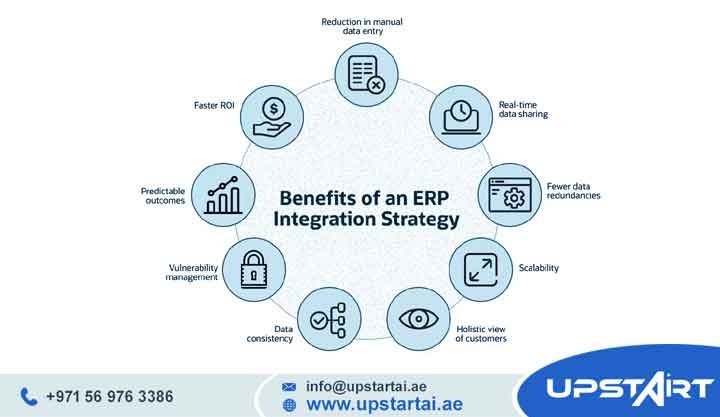
ERP Integration Best Practices: A Guide to Seamless Digital Connection with UpstartAI.. The UAE’s Experts in High-Performance ERP System Integration and Secure Data Strategy. Getting all your different business apps to actually talk to each other is probably one of the toughest parts of running a company today, but honestly, it’s the most important thing you can do. UpstartAI is really good at best practices for ERP integration, helping companies in Dubai, Abu Dhabi, and across the Emirates connect their software without the usual headaches. We’ve seen that a solid ERP integration strategy is what makes the difference between a business that grows fast and one that is stuck doing boring manual data entry. Our team focuses on building an ERP integration framework that’s safe, quick, and ready to grow as you do.
Why Choose Us: Your Partner for ERP Integration Consulting Best Practices
Choosing a team to handle your business data is a big decision, and here at UpstartAI, we’ve spent years becoming experts in ERP integration consulting best practices. We don’t just “plug things in” and leave; we look at your whole business setup to make sure our ERP integration methodology really makes your life easier. We know the UAE market inside out-everything from local VAT rules to how business flows in the different Free Zones. Also, we take ERP integration security best practices very seriously, using the latest ERP integration encryption best practices to keep your company secrets locked away. Our clients love how fast we work, but they stay because of the ongoing support we give long after the first setup is done.
We also know that change can be a bit scary for any team, so we put a lot of effort into ERP integration change management. We make sure your staff actually understands how to use the new connected systems so there’s no confusion later on. UpstartAI is built on trust and talking clearly, so your ERP integration governance is always easy to understand. We’ve helped many companies avoid those ERP integration common mistakes that lead to wasted money and lost files. When you work with us, you get more than just a tech service; you’re getting a partner who really cares about ERP integration failure prevention and your long-term success.
Our Services: Smart Analytics and Enterprise Integration Solutions
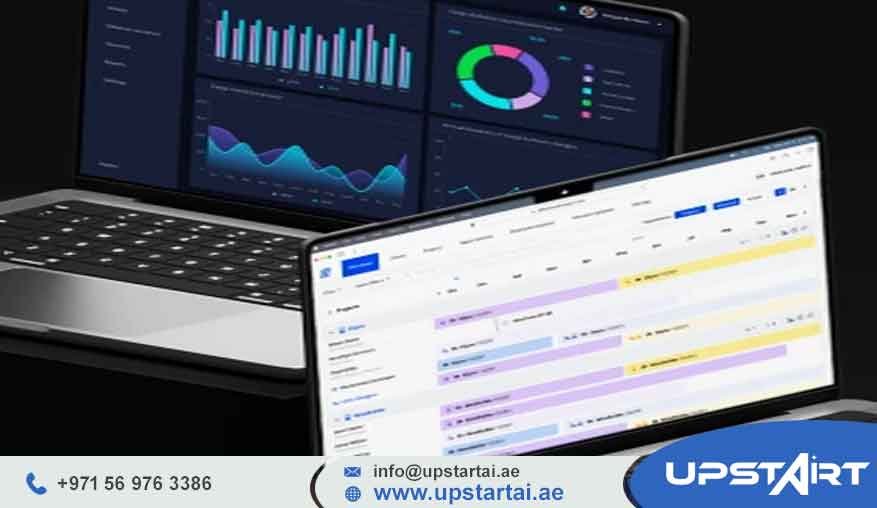
UpstartAI offers a lot of services that focus on ERP integration for business processes and making sure you can see all your data clearly. Our biggest strength is building business intelligence dashboards that pull info from all your connected apps into one single screen. We make executive dashboards for the bosses, finance dashboards for the accounting team, and sales dashboards to track every single deal. Our operations dashboards, marketing analytics, and HR dashboards make sure every department has the real-time analytics they need to work fast. We also do the “behind the scenes” work like data integration, data modeling, and building custom reporting tools that fit exactly how you like to work.
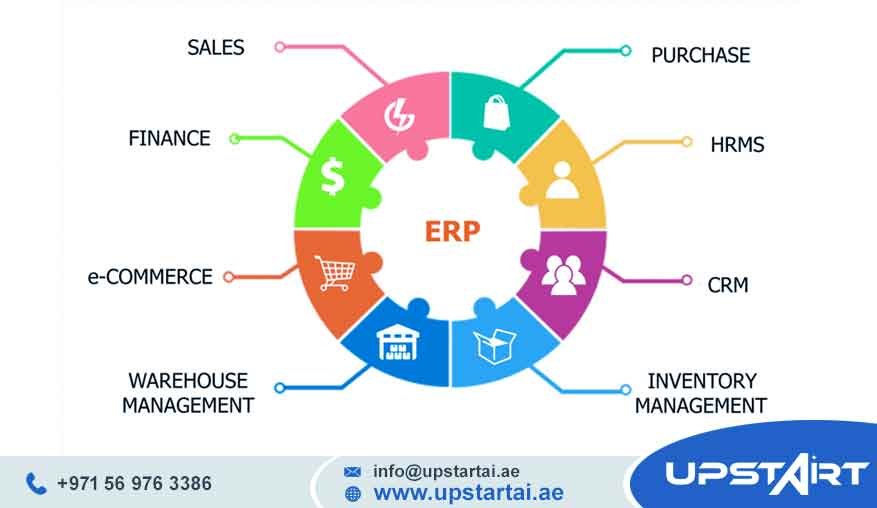
We’re experts in ERP API integration best practices and using ERP middleware integration to link systems that usually don’t like to talk to each other. Whether you need ERP integration with CRM best practices or want to connect your ERP integration with eCommerce platforms, we have the tools for that. Our services also cover linking your ERP integration with supply chain systems, HRMS, and accounting software. We use a modern ERP integration microservices approach and iPaaS (Integration Platform as a Service) to make sure your setup is flexible. By focusing on reporting automation, we help you move away from messy Excel files and into a world of clear, visual data.
Process: Your Step-by-Step ERP Integration Implementation Guide
Our ERP integration implementation guide is designed to be simple so there are no surprises for you. We start with a discovery call to learn about your goals and what software you’re currently using. Then, we move to KPI mapping, where we figure out the numbers that really matter for your success. After that, we do a deep data source audit to check if your current info is healthy. This is where we decide on the best ERP integration architecture and ERP integration patterns for you. We make sure ERP data integration best practices are followed from day one.
Once the plan is ready, we start the integration and dashboard build. This is when we connect your ERP to your other tools and build those easy-to-read reports. We don’t just launch and disappear; we do very strict testing to make sure the ERP data synchronization best practices are working perfectly. After that, we do the training and handover, showing your team how to use their new KPI dashboards. Finally, we do ongoing optimization, where we perform ERP integration performance tuning to keep things fast as you grow. This complete ERP integration roadmap ensures your systems stay connected for years.
Issues We Fix: Solving Data Silos and Leadership Blind Spots
A lot of leaders in the UAE find themselves “flying blind” because their data is stuck in different places. When sales uses one system and accounting uses another, you get siloed data and inconsistent reports that don’t match up. We fix this by creating a single source of truth through ERP integration for business processes. This stops the need for manual Excel reporting and makes sure everyone is looking at the same real-time numbers. We also solve the problem of delayed decision-making-with our automated refreshes, you don’t have to wait until the end of the month to see how the business is doing.
We also fix technical issues like ERP integration error handling and messy data sources. If your systems are slow or keep having glitches, our ERP integration performance optimization can really help. We fix leadership blind spots by providing drill-down reporting and executive summaries that show exactly where the problems are. Whether it’s retail multi-branch performance gaps, inventory overstock, or campaign spend waste, our business intelligence dashboards show you the truth right away. By focusing on ERP integration risk management, we help you avoid those operational inefficiencies that slow down so many companies.
Costs and Pricing: A Transparent ERP Integration Cost Estimate
We understand that budget is a major consideration, so we believe in being transparent about how ERP integration pricing works. The overall cost depends on several factors, including how many systems need to be connected, the volume and quality of your data, and the complexity of the ERP integration architecture required.
We also consider data refresh frequency. Real-time ERP integration typically requires more planning and configuration than scheduled batch updates, such as hourly or daily refreshes. Our aim is to deliver ERP integration best practices for both SMEs and large enterprises, with a strong focus on long-term return on investment.
For a typical UAE-based project-such as integrating an ERP with a CRM and building essential KPI dashboards—the scope is usually straightforward. More advanced projects involving ERP integration with legacy systems or a complex hybrid ERP integration strategy require additional effort and planning.
To avoid surprises, we always provide a clear, detailed quote after completing an initial data source audit. This ensures you know exactly what to expect before any work begins. Our focus is on long-term value, helping you reduce manual data entry, improve data accuracy, and make smarter, faster business decisions.
Tips and Advice: Best Practices for ERP Integration and Data Health
If you want to know how to integrate ERP systems successfully, our first tip is to check your data quality before starting. “Garbage in, garbage out” is very true with integration. Spend some time cleaning your old records and fixing any mistakes. We also recommend following ERP integration data governance rules so you know who “owns” which piece of info. Another good tip is to use a hybrid ERP integration strategy if you aren’t ready to move everything to the cloud just yet-it’s a great way to stay flexible.
Security shouldn’t be an afterthought, either. Always follow ERP integration access control and ERP integration compliance standards to keep your data safe and follow local laws. We also suggest setting up ERP integration monitoring best practices so you can find and fix errors before they turn into big problems. And don’t forget the people! Good ERP integration change management is the secret to making sure your team actually uses the cool new tools you’ve built. If you follow these ERP system integration best practices, your business will run much more smoothly.
Why We’re #1: The UpstartAI Difference in ERP Integration
What makes UpstartAI the top choice for ERP integration services in the UAE? It’s our “KPI-first” approach. We don’t just move data around; we make sure it actually helps you grow. We offer faster implementation than those huge global firms because we have a local team that understands the UAE business context. Our clean UX dashboards are designed to be easy for anyone to use, not just the IT experts. Plus, we use AI-driven insights to help you see trends that others might miss.
Our scalable architecture means as your company gets bigger, your integration gets bigger too. We also give great post-launch support, so if you have a question on a Tuesday morning, we’re there for you. We focus on ERP integration failure prevention, making sure your systems stay linked and your data stays correct. This mix of local care and high-tech skill is why we’re the #1 ERP integration consulting best practices partner around here.
Success Stories: Real Impact of ERP Integration Best Practices
Case 1: Retail Chain Success in Dubai A local retail chain with 15 shops was really struggling with siloed data. Their warehouse never knew what the shops were selling in real-time, which led to inventory overstock in some spots and empty shelves in others. They really needed a better ERP integration strategy.
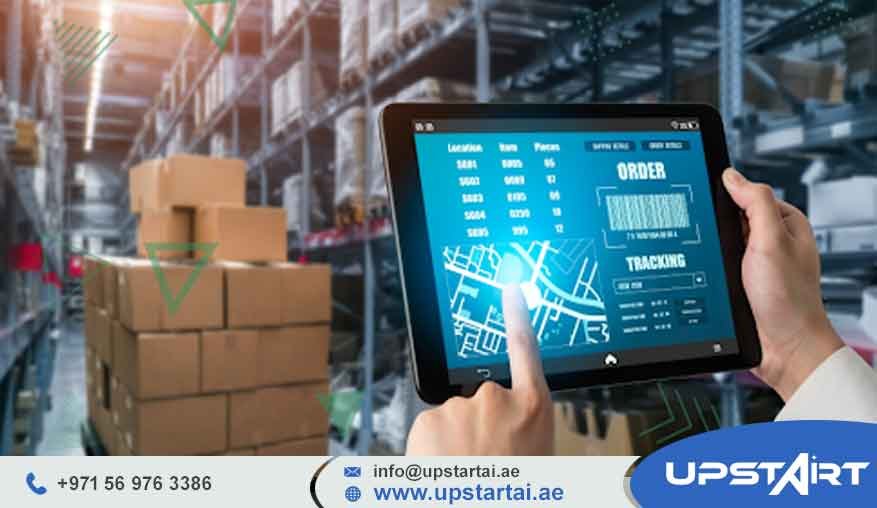
The Result: UpstartAI set up an ERP integration with eCommerce platforms and linked their physical shop systems. We built a real-time operations dashboard that showed stock levels everywhere.
Case 2: Logistics Firm Growth in Abu Dhabi A busy logistics company was spending way too many hours on manual Excel reporting for their clients. Their data was a bit of a mess, and they were worried about ERP integration compliance standards.
The Result: We moved them to a cloud ERP integration setup and automated all their client reports. We followed all ERP integration security best practices to make sure international data laws were met. They saved 40 hours a week on paperwork and their clients loved the new, clear executive reporting.
Frequently Asked Questions (FAQs)
What are ERP integration best practices?
ERP integration best practices are proven methods that ensure different systems work together smoothly. These include cleaning and standardizing data before integration, using secure APIs, and having a clear integration plan to avoid system failures.
What is ERP integration governance?
ERP integration governance defines the rules around data access, data sharing, security controls, and long-term system management to ensure integrations remain stable and compliant.
What is iPaaS?
ERP integration using iPaaS (Integration Platform as a Service) connects applications through a cloud-based platform. It is typically faster, more scalable, and more flexible than building custom integrations from scratch.
How long does a normal ERP integration take?
>>>For most mid-sized businesses in the UAE, a typical ERP integration project takes 8 to 14 weeks, depending on how many systems are being connected and the complexity involved.
What is the difference between real-time vs batch integration?
ERP real-time vs batch integration refers to when data updates occur. Real-time integration updates instantly when changes happen, while batch integration processes data at set intervals, such as hourly or daily.
What is a hybrid ERP integration strategy?
A hybrid ERP integration strategy combines cloud-based systems with traditional on-premise software. This approach is common for organizations gradually transitioning to the cloud.
Do you support ERP integration with CRM?
Absolutely. ERP integration with CRM best practices is one of our most common services, helping sales, finance, and operations teams work with shared, accurate data.
Can you help with ERP integration for SMEs?
Yes. Our ERP integration best practices for SMEs focus on affordability, simplicity, and ease of maintenance while still delivering enterprise-level performance.
Is my data safe during ERP integration?
Yes. We follow strict ERP integration security best practices, including encryption, access controls, and secure authentication, to protect your business data at every stage.
What tools do you use for dashboards?
We primarily use Power BI, Tableau, and Looker to create high-quality business intelligence dashboards tailored to your ERP data.
Contact UpstartAI Today: Your ERP Integration Best Practices Partners
Don’t let disconnected systems hold your business back or create costly inefficiencies. UpstartAI is the trusted partner for ERP integration and implementation, guiding UAE businesses every step of the way to connect their entire technology ecosystem. With UpstartAI, your data flows effortlessly between systems, enabling smarter decision-making, faster responses to market changes, and improved operational efficiency.
Service Areas: Dubai, Abu Dhabi, Sharjah, Ajman, Ras Al Khaimah, Fujairah, Umm Al Quwain