ERP SaaS vs Custom – +971 56 976 3386 S👍
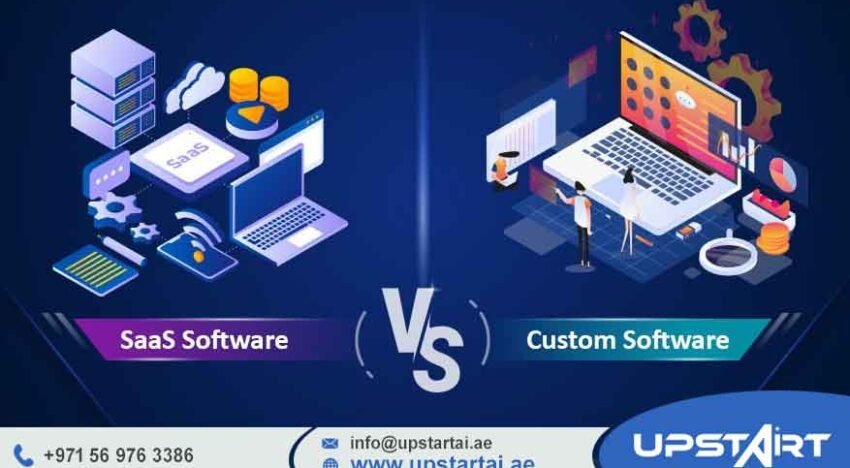
If you are trying to grow a modern business in the Middle East, chances are you’ve already hit a crossroads: should you invest in a SaaS ERP platform or build a fully custom ERP system? This decision is no longer just an IT conversation – it directly affects profitability, scalability, compliance, operational speed, and long-term competitiveness. SaaS ERP vs Custom ERP For companies operating in fast-moving economies like Dubai or expanding into regional hubs such as Riyadh, choosing the wrong ERP path can quietly drain resources, delay innovation, and lock teams into workflows that don’t fit how they actually work.
That’s why this guide exists. Instead of pushing one solution, the goal is to give you a clear, practical framework for understanding SaaS ERP versus custom ERP in real business terms – cost, agility, compliance, ownership, and future growth. Organizations across the United Arab Emirates and Saudi Arabia are entering a new digital maturity phase where ERP decisions are no longer optional upgrades – they are foundational strategy choices.
Upstart AI approaches ERP consulting as a partnership, not a product pitch. Every organization has unique workflows, regulatory obligations, growth ambitions, and operational bottlenecks. A logistics company scaling across borders faces very different ERP challenges than a retail chain managing omnichannel inventory. SaaS ERP vs Custom ERP The right ERP strategy aligns with how your company actually creates value – not how software vendors expect you to operate.
SaaS ERP vs Custom ERP
At its simplest level, SaaS ERP is a subscription-based platform hosted by a provider. You access it via the cloud, pay a recurring fee, and receive ongoing updates, maintenance, and infrastructure management. Custom ERP, on the other hand, is purpose-built software designed specifically around your workflows, reporting requirements, integrations, and growth plans.
But the real difference isn’t deployment style – it’s control versus convenience.
SaaS ERP emphasizes speed, predictability, and lower upfront investment. It’s built around standardized workflows that suit the majority of businesses. This makes onboarding faster and reduces internal IT burden. However, standardization can introduce constraints when your operations deviate from common models.
Custom ERP prioritizes alignment and ownership. Every module, workflow, dashboard, and automation is designed around how your organization operates. While this requires more planning and investment upfront, it removes the friction of adapting your business to fit software limitations.
Think of SaaS ERP as renting a furnished apartment – fast, convenient, and ready to use. SaaS ERP vs Custom ERP Custom ERP is like building your own home – more effort initially, but tailored to how you live.
Why ERP Decisions Matter More Than Ever
ERP adoption across the Middle East is accelerating due to regulatory digitization, VAT compliance requirements, cross-border expansion, and rising expectations for real-time analytics. Businesses are under pressure to make faster decisions, integrate fragmented data sources, and maintain audit-ready reporting.
SaaS ERP adoption is growing rapidly among startups and SMEs because it lowers the barrier to digital transformation. Meanwhile, large enterprises and specialized industries increasingly pursue custom ERP to support complex workflows, advanced automation, and proprietary processes.
The danger lies in choosing an ERP approach based only on short-term cost or what seems trendy at the moment. Many companies underestimate hidden SaaS expenses, including escalating per-user licensing, advanced module fees, custom integration charges, data export limitations, and long-term vendor dependency risks. On the other hand, some organizations rush into custom ERP development without a clear architectural roadmap, which can lead to scope creep, delayed launches, and poor user adoption. SaaS ERP vs Custom ERP A strong ERP strategy carefully balances current operational needs with future growth plans, focusing not just on what works today, but on what will remain sustainable and effective over time.
Total Cost of Ownership: The Financial Lens
Initial pricing rarely tells the full ERP story. A SaaS subscription may appear affordable, but multi-year licensing, scaling costs, and customization fees can exceed expectations. Custom ERP involves higher upfront development investment but typically reduces recurring vendor fees and increases long-term control.
When evaluating ERP economics, leaders should look beyond the initial price and examine the full financial picture over time. This includes analyzing the five-year total cost of ownership, infrastructure and hosting needs, integration expenses, upgrade and maintenance models, expected productivity impact, and the cost of scaling as the business grows. SaaS ERP vs Custom ERP Taking this broader view provides financial clarity, prevents unexpected budget strain, and supports smarter capital allocation. ERP should be treated not as a simple software purchase, but as a long-term operational investment that directly influences efficiency and growth.
Flexibility and Workflow Alignment
Every business develops unique operational rhythms over time. Approval hierarchies, inventory models, procurement cycles, reporting structures, and automation logic evolve to support competitive advantage.
SaaS ERP platforms encourage standardized workflows. This improves onboarding but may force teams to change established processes. For some organizations, this standardization is beneficial – it introduces best practices and operational discipline.
Custom ERP flips the equation. Instead of adjusting workflows to software, software is engineered around workflows. This enables:
When a company’s operations are a key competitive advantage, customization becomes a strategic necessity rather than a luxury. Tailored systems support specialized automation, complex approval flows, advanced reporting, and user experiences built around how teams actually work, while also protecting proprietary processes that differentiate the business in the market.
Security, Compliance, and Data Governance
Data governance is a major ERP consideration in the Middle East. Regulatory frameworks increasingly emphasize data residency, audit transparency, and cross-border compliance.
SaaS ERP vendors typically provide enterprise-grade security infrastructure, encryption, and automated compliance updates. However, data hosting location and vendor dependency must be evaluated carefully.
Custom ERP provides organizations with deeper control over where systems are hosted, how access is structured, how audits are tracked, how compliance workflows are enforced, and how security is implemented. This level of governance is especially valuable for businesses that manage sensitive financial, healthcare, or government data, where tighter oversight, regulatory alignment, and risk management are critical to daily operations.
Industry-Driven ERP Decisions
ERP suitability varies dramatically by sector:
Manufacturing organizations often require machine telemetry integration, production scheduling logic, and custom inventory flows – areas where custom ERP excels.
Retail and trading businesses benefit from SaaS ERP speed, omnichannel inventory modules, and rapid deployment – ideal for scaling operations quickly.
Logistics and supply chain operations frequently need route optimization, fleet analytics, and warehouse automation – scenarios where custom ERP supports operational complexity.
Government and regulated sectors demand strict compliance frameworks, localized hosting, and advanced audit capabilities – often favoring custom solutions.
ERP isn’t one-size-fits-all; industry realities shape architecture decisions.
Scalability and Future Readiness
An ERP system must evolve alongside your organization. Rapid expansion, mergers, new regulatory environments, or product diversification can expose limitations in rigid systems.
SaaS ERP platforms scale infrastructure easily but may introduce licensing and customization ceilings. Custom ERP architectures, when properly designed, scale functionally – adapting workflows and integrations as business models evolve.
Future readiness means choosing an ERP strategy that grows with you, not against you.
Adoption and Usability: The Human Factor
Even the most advanced ERP system fails if teams resist using it. Adoption hinges on intuitive design, relevant dashboards, and meaningful automation.
SaaS ERP platforms benefit from mature UI frameworks refined through mass adoption. Custom ERP systems prioritize workflow alignment, reducing friction because tools reflect familiar processes.
Training, onboarding, and change management determine real ROI. Technology success depends on people engagement.
The Upstart AI ERP Decision Framework
Common ERP Pitfalls to Avoid
Many ERP failures can be traced back to avoidable planning mistakes rather than software limitations. Organizations often choose systems based on impressive feature lists instead of how well the workflows actually match daily operations, which leads to friction after deployment. Another common issue is underestimating the complexity of data migration – messy or poorly structured data can derail reporting and user confidence from day one. Long-term licensing and scaling costs are frequently overlooked, creating budget strain later. Skipping proper user training reduces adoption, while ignoring compliance requirements exposes the business to regulatory risk. Over-customizing without architectural discipline can also create fragile systems that are hard to maintain. Recognizing and avoiding these pitfalls helps protect your investment, ensures smoother implementation, and preserves operational continuity as the ERP environment evolves.
ERP Migration: Moving from SaaS to Custom (or Vice Versa)
Businesses naturally evolve, and as operations grow more complex, ERP requirements change as well. Migration to a new system is absolutely possible, but it must be approached with careful planning to avoid disruption. A successful transition starts with thorough data cleansing and validation to ensure only accurate, structured information is carried forward. Workflow mapping is equally important so existing processes are preserved or improved rather than broken during the move. Maintaining integration continuity ensures connected tools keep functioning without interruption, while user retraining prepares teams to confidently adopt the new environment. Parallel testing allows both systems to run side by side temporarily, helping identify issues before full deployment. When executed in phased stages, migration protects operational stability, reduces risk, and allows the organization to modernize its ERP foundation without sacrificing productivity.
Frequently Asked ERP Strategy Questions
1. Which ERP is better for long-term growth?
The right choice depends on how complex your workflows are and how much ownership and flexibility you want. SaaS supports fast scaling, while custom ERP supports deep operational alignment as you grow.
2. Is SaaS ERP always cheaper than custom ERP?
SaaS usually costs less upfront, but long-term expenses can grow with licensing, add-ons, and integrations. Custom ERP requires higher initial investment but may reduce recurring dependency costs.
3. When should a company seriously consider custom ERP?
Custom ERP makes sense when your workflows are highly specialized, compliance is strict, or your competitive advantage depends on proprietary processes.
4. Can SaaS ERP handle regulatory compliance requirements?
Yes, most mature SaaS platforms support compliance standards. However, custom ERP allows deeper control over audit logic, reporting structure, and data governance.
5. How long does ERP implementation usually take?
SaaS deployments can take weeks, while custom ERP projects may take several months depending on complexity, integrations, and testing requirements.
6. What is the biggest risk in ERP adoption?
Poor alignment with real workflows and lack of user adoption are the biggest risks. Even powerful software fails if teams don’t actually use it.
7. Can ERP systems integrate with my existing tools?
Yes. Both SaaS and custom ERP platforms can connect with CRM, accounting, logistics, and analytics tools — though integration depth varies by architecture.
8. Will ERP automation replace staff roles?
ERP systems are designed to remove repetitive manual work, not replace people. They allow teams to focus on higher-value analysis and decision-making.
9. How important is data quality before ERP implementation?
Extremely important. Clean, structured data ensures accurate reporting and prevents long-term analytics issues. Many ERP failures start with messy data migration.
10. Can I switch from SaaS ERP to custom ERP later?
Yes, but it requires careful planning, structured migration, and workflow mapping to avoid disruption. Transition strategy is critical to preserve operational continuity.
Strategic Perspective: ERP as a Business Multiplier
ERP should not be viewed as a cost center – it is a multiplier of operational clarity, efficiency, and strategic visibility. The right system reduces friction, improves accountability, accelerates reporting, and enables data-driven leadership.
Organizations that treat ERP as a long-term architecture investment consistently outperform competitors relying on fragmented systems.
Final Thoughts: Choosing with Confidence
There is no universal winner in the SaaS versus custom ERP debate. The correct choice reflects your workflows, growth ambitions, compliance environment, and operational philosophy.
The smartest ERP strategy isn’t about chasing trends – it’s about aligning technology with how your organization actually works today and where it plans to go tomorrow.
If you are evaluating ERP transformation, the goal isn’t just to install software – it’s to build a foundation that supports smarter decisions, scalable operations, and sustainable growth for years to come.